 觀音
觀音
觀音
觀音
You didn’t arrive by accident.
Something in you keeps returning — not because you haven’t found the answer, but because the question itself keeps deepening.
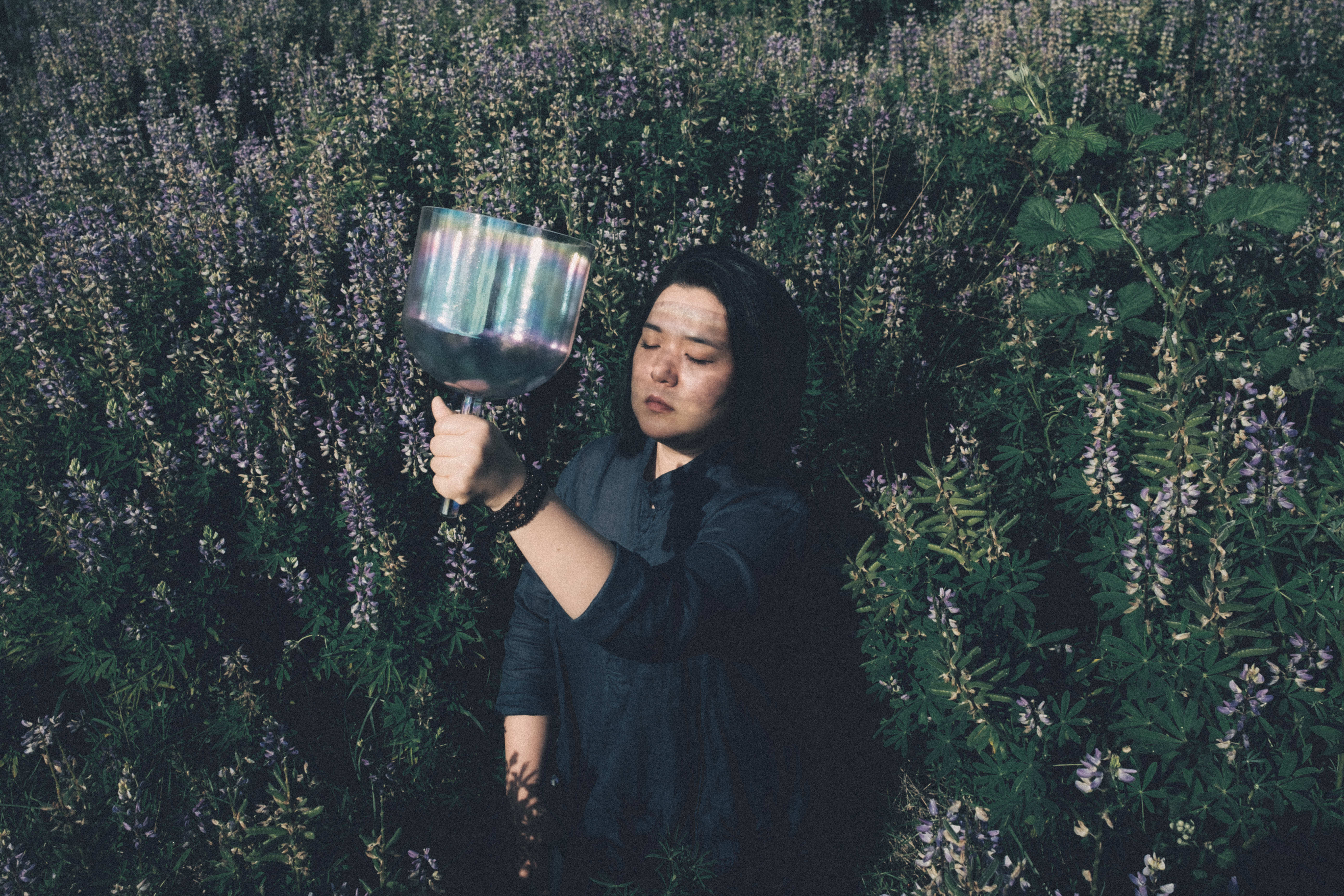
She grew up in the southern part of South Korea — where the mountains met the sea and stillness was the texture of ordinary life. At eighteen, she left for America. The years that followed slowly covered it over.
Burnout came after a career in high fashion in Seattle. The mind couldn't rest. The suffering was real. Buddhism met her there — the Four Noble Truths named what was happening, and pointed toward a way through.
Years of practice led her to the mountains of Peru, where the self she had built dissolved into emptiness, into the absolute interdependence of all beings. The habitual mind didn't dissolve with it. The real practice began in the returning.
Halfway through a 100-day Korean Zen retreat in the mountains, she stood at three in the morning before Sanshin-gak — the mountain spirit temple. A voice rose from within the hall, chanting the Heart Sutra. The listener and the listened-to — for a moment, indistinguishably one. That was how she met Jingfu.
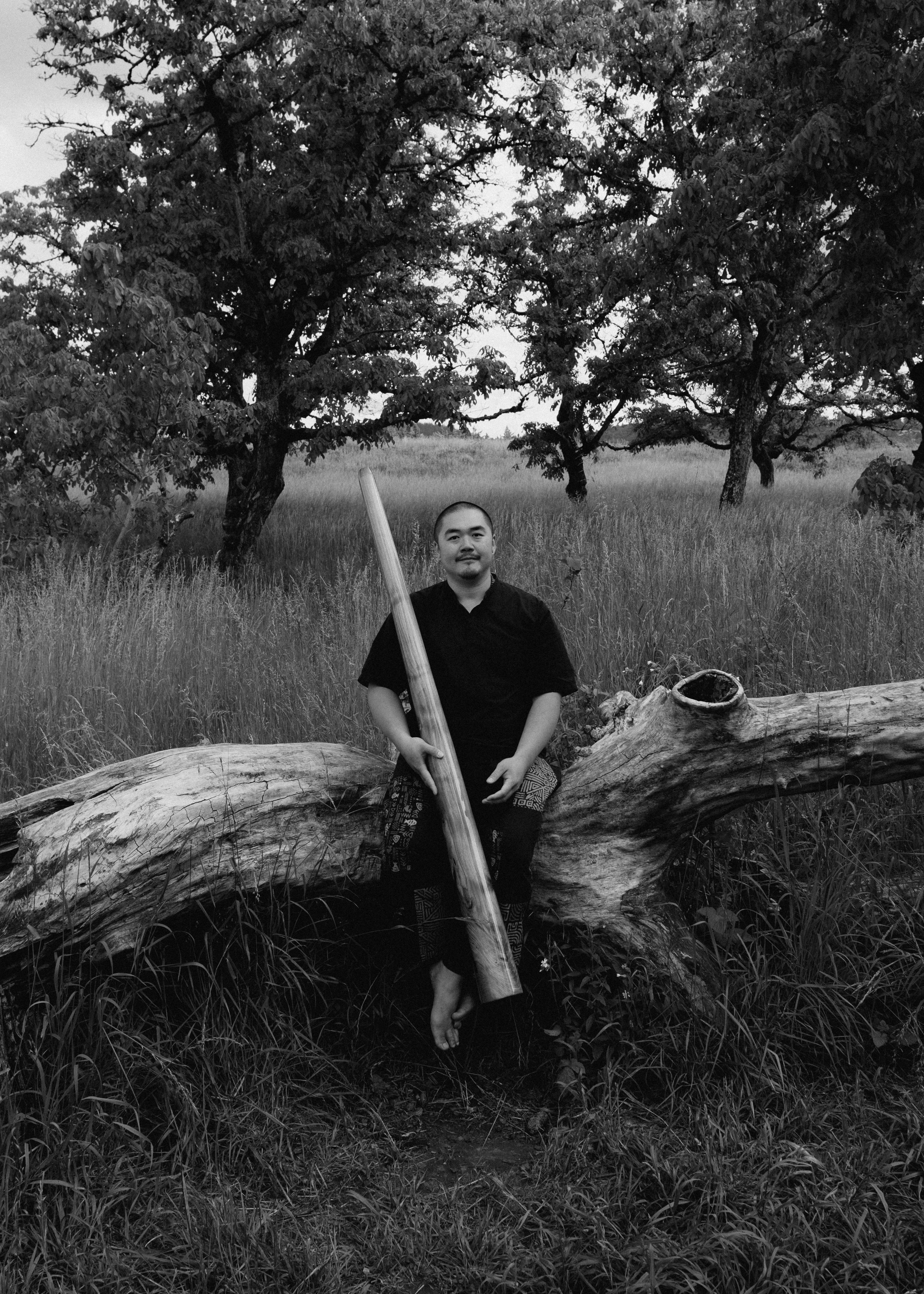
He grew up in Singapore noticing something early — how rarely people seemed at home in their breath, in their bodies. That noticing stayed with him like a question he couldn't yet form.
Music led him to a career in events and concert production. Freediving and Traditional Thai Bodywork hinted at what breath and presence could do in the body. He left before burnout arrived. India first. Then New Zealand — six months on a motorcycle, the didgeridoo, and a first 10-day Vipassana retreat. On day seven, a bliss state arose he had no framework for. The search to understand it carried him into the sutras, into the years that followed.
On the seventh day of his third Vipassana, the search collapsed — a clear dissolution into source. He returned to his body laughing and crying at once. A vow arose, unbidden: if everyone could have a direct experience of this, the whole world would be vastly different.
With the dissolution came another pull — to take vows. He searched Thai forest monasteries, then settled in Korean Zen. Three years of intense practice on the path to becoming a novice monk — until in time, even that desire fell away. The path then led him out, to Seyeong.
Two people. Opposite sides of the world. Different wounds. The same fire.
Both had walked to the very edge of themselves — and dissolved. The same ground beneath their feet. The same vow — arrived at independently, in separate moments of complete surrender.
Partners. Parents of two young children. Parenthood is not separate from the practice — it is the practice. The daily, humbling reminder that nothing is excluded.
An old saying: fall down seven times, get up eight. Zen Master Seung Sahn lived it, and taught it with everything he had. Practice is not the arriving. It is the returning — again and again, to the breath, to the seat, to this. The Daruma doll rights itself not because it never falls. Because the weight is where it needs to be.
This is what the vow built. Not for a particular kind of person. For whoever arrives.
If something brought you here — this may be yours too.
There is an old story of the musk deer — who searches endlessly through forest and field for a fragrance it cannot locate, never realizing the fragrance comes from within itself.
Most of us have been that deer.
Breath. Sound. Stillness. These are ancient — older than every lineage name, every institution that has tried to hold them. We are not here to transform you. Transformation implies something broken. Something to be fixed. We do not believe that.
What we offer is not a method. Conditions in which what is already present can be recognized.
Rooted in the Zen Buddhist tradition — informed by the teachings of Zen Master Seung Sahn: Only Don't Know, Just Like This. The body and breath know. Our work is listening for what they have to say.
觀音 — Kuanyin — listens to the cries of the world. Not to fix them. To listen. We hold the same intention: total presence, total receptivity. What you do with what arises is entirely yours.
The circle. The session. The long arc.
A fifteen-minute conversation will tell us — and tell you — which is yours.